


Table of Contents
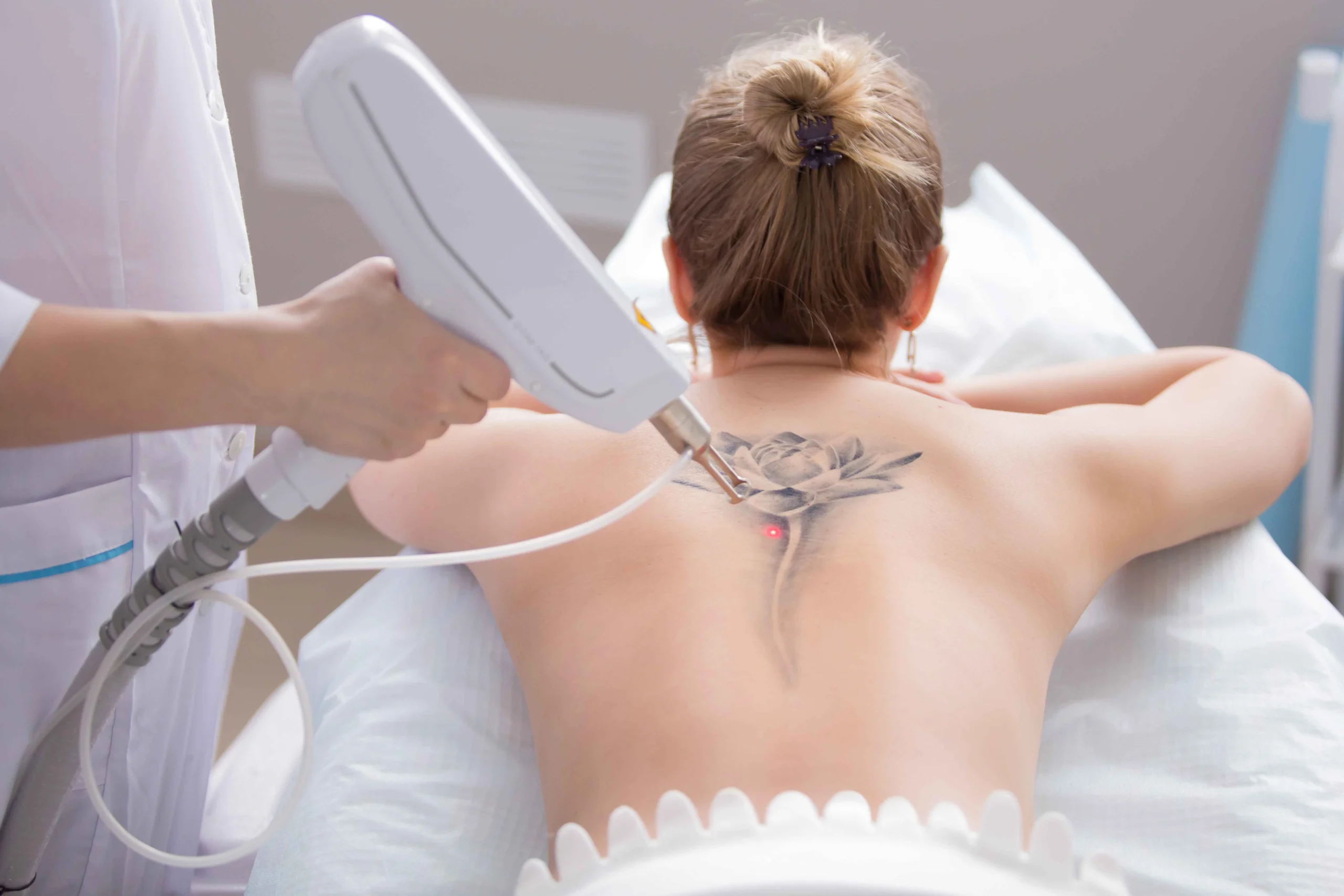
Laser tattoo removal helps address unwanted ink over time. Tattoos are typically designed to be permanent, created with specialized inks that resist breakdown inside the skin. Over time, however, personal styles change, memories shift, and what once felt meaningful may no longer reflect who someone is today.
This is where laser tattoo reduction becomes a practical and science-driven solution. Rather than removing skin layers, modern systems focus on disrupting tattoo pigment while preserving healthy tissue.
Where Tattoo Ink Lives in the Skin
To determine how laser tattoo removal works, it is important to understand how tattoos are placed. Tattoo ink is deposited into the dermis, the layer beneath the outer epidermis. The dermis does not regenerate as quickly as surface skin. This allows the ink to remain visible for decades.
The body recognizes tattoo ink as a foreign substance. However, the pigment particles are typically too large for the immune system to remove effectively. Laser treatment changes that dynamic by fragmenting those particles into smaller pieces that the body can process over time.
The Principle Behind Laser Tattoo Reduction Technology
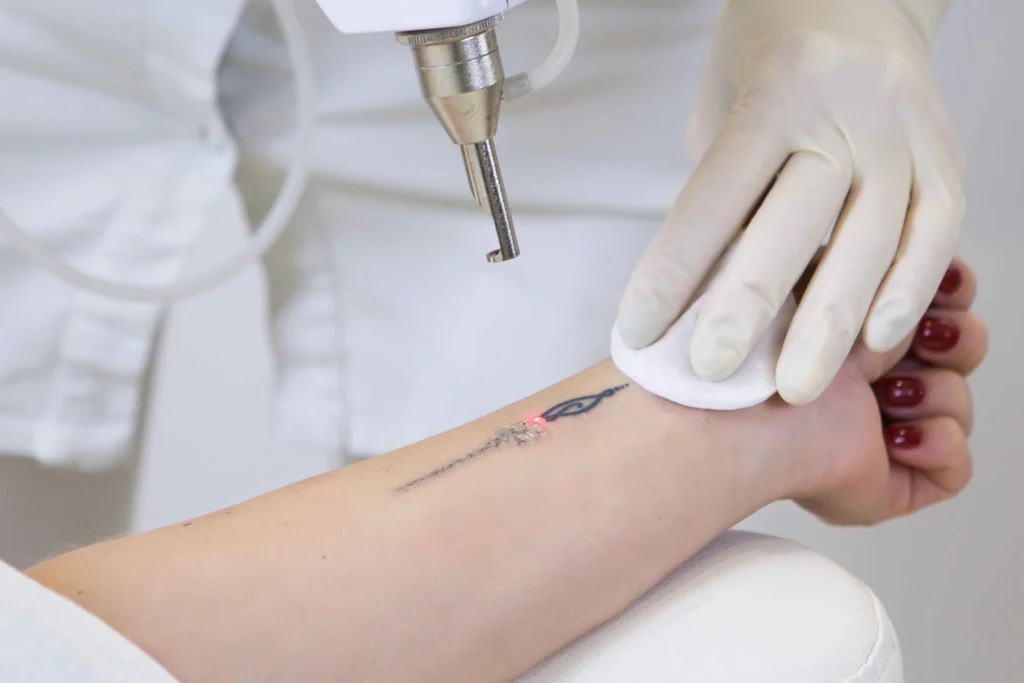
At its core, laser tattoo reduction technology uses concentrated light energy to target pigment without damaging surrounding skin. The laser emits energy at specific wavelengths. These are then absorbed by tattoo ink rather than natural skin structures.
When the ink absorbs this energy, it rapidly heats and fractures into microscopic fragments. This process is often referred to as tattoo pigment laser breakdown.
The laser itself does not remove the ink from the body. Instead, it creates conditions that allow the immune system to clear the fragmented pigment gradually. The latter occurs through natural metabolic processes.
This approach prioritizes controlled energy delivery, precision, and tissue preservation rather than aggressive skin removal.
Why Laser Wavelengths Matter
Not all tattoo inks respond to the same type of light. Ink color, chemical composition, and density all influence how effectively a laser can break it apart. This is why laser wavelengths for tattoo removal are a critical part of treatment planning.
- Black ink absorbs a wide range of wavelengths and often responds the fastest.
- Colored inks, especially green, blue, and some red pigments, require more selective wavelengths to achieve effective breakdown.
Advanced systems allow providers to adjust wavelengths based on the tattoo’s color profile, depth, and saturation.
Using the correct wavelength reduces unnecessary heat exposure to surrounding tissue while improving pigment fragmentation.
Understanding Q-Switched Laser Technology
One of the most widely used and effective tools in advanced tattoo removal technology is the Q-switched laser. This system is renowned for delivering high-energy pulses in extremely short durations, measured in nanoseconds.
Instead of slowly heating the ink, the Q-switched laser delivers energy. This happens so quickly that it creates a photoacoustic effect. The latter produces a mechanical shock that shatters ink particles rather than burning them. This distinction is important because it minimizes thermal damage to the skin.
Q-switched lasers are especially effective for deeply embedded pigment and for tattoos with dense ink saturation. The precision of these pulses allows for targeted treatment while reducing the risk of scarring when performed correctly.
What Happens After the Laser Session
The visible fading of a tattoo does not happen immediately after treatment. Once the laser fragments the ink, the body begins the process of clearing it.
Immune cells known as macrophages transport pigment fragments through the lymphatic system. The process may take weeks.
This gradual clearance explains why treatments are spaced several weeks apart. It also explains why multiple sessions are necessary. Each treatment breaks down additional pigment while allowing the skin and immune system time to recover and respond.
Why Tattoo Reduction Takes Time
Tattoo reduction is a process, not a single event. Several variables influence how quickly and effectively ink fades, including:
- Ink depth and density
- Tattoo age
- Color composition
- Placement on the body
- Individual immune response
- Overall health and circulation
Because tattoo inks are unregulated and vary widely in composition, no two tattoos respond exactly the same way. Patience is a critical part of successful outcomes. This especially applies to professional or multi-colored tattoos.
Skin Safety and Treatment Precision
Modern laser tattoo reduction prioritizes skin integrity. Proper settings, correct wavelength selection, and appropriate treatment intervals all help minimize side effects.
Temporary redness, swelling, or mild blistering can occur, particularly with dense or dark ink. These reactions are typically part of the skin’s healing response and resolve with proper aftercare. Avoiding sun exposure, following post-treatment instructions, and allowing adequate time between sessions all contribute to safer outcomes.m,
The Role of Aftercare in Results
Aftercare supports both skin healing and pigment clearance. Keeping the treated area clean, avoiding friction, and protecting the skin from UV exposure are essential. Sun exposure increases the risk of pigmentation changes and can interfere with treatment progress.
Hydration, good circulation, and overall health also influence how efficiently the body clears fragmented ink. Laser technology initiates the process, but the biological response completes it.
Why Professional Technology Makes a Difference
Attempting tattoo removal without proper equipment or expertise increases the risk of scarring and uneven results. Advanced tattoo removal technology, when used by trained professionals, allows for precise energy delivery tailored to each tattoo.
Q-switched lasers remain a trusted standard. This is because they balance power with control. The mentioned stability supports effective pigment fragmentation while respecting the natural structure of the skin.
Cheeky Medspa’s Laser Tattoo Reduction in Kenai, Fairbanks & Homer, AK
Cheeky Medspa provides professional laser tattoo reduction in Kenai, Fairbanks & Homer, AK, using advanced Q-switched laser technology. This innovative process is designed to reduce ink without scarring and is part of our comprehensive laser services.
Our system uses a precise laser wavelength that penetrates deep into the skin to target tattoo pigment while protecting surrounding tissue.
By delivering intense energy in extremely short pulses, the laser breaks ink molecules apart in minutes rather than overheating the skin. Our controlled approach minimizes the risk of burns, scarring, or unnecessary skin trauma.
The Cheeky Medspa team understands that tattoo reduction is not a one-size-fits-all process. Because tattoo inks vary widely in composition and depth, results differ from person to person. Factors such as ink density, treatment area, medical history, and overall health all influence outcomes.
Book your laser tattoo reduction consultation today!
Frequently Asked Questions
How many sessions are usually needed for laser tattoo reduction?
Most tattoos require multiple sessions because ink density, color, and depth determine how gradually the body can clear fragmented pigment.
Does laser tattoo reduction damage the surrounding skin?
When performed with proper settings and professional equipment, the laser targets tattoo pigment while minimizing impact on surrounding skin tissue.
Why are treatments spaced several weeks apart?
Spacing sessions allows the skin to heal and gives the immune system time to remove broken-down ink particles effectively.
Can all tattoo colors be reduced with laser technology?
Most ink colors can be treated, but some shades respond more slowly due to differences in pigment composition and light absorption.
Is laser tattoo reduction in Kenai, Fairbanks & Homer, AK, safe for different skin types?
With appropriate laser wavelengths and individualized treatment planning, tattoo reduction can be performed safely across a wide range of skin tones.